NASA estimates 22 Starship flights for Moon mission
New figures from a safety panel suggest the lunar lander will require more orbital refueling trips than previously hoped.
By Ji-eun Choi ·
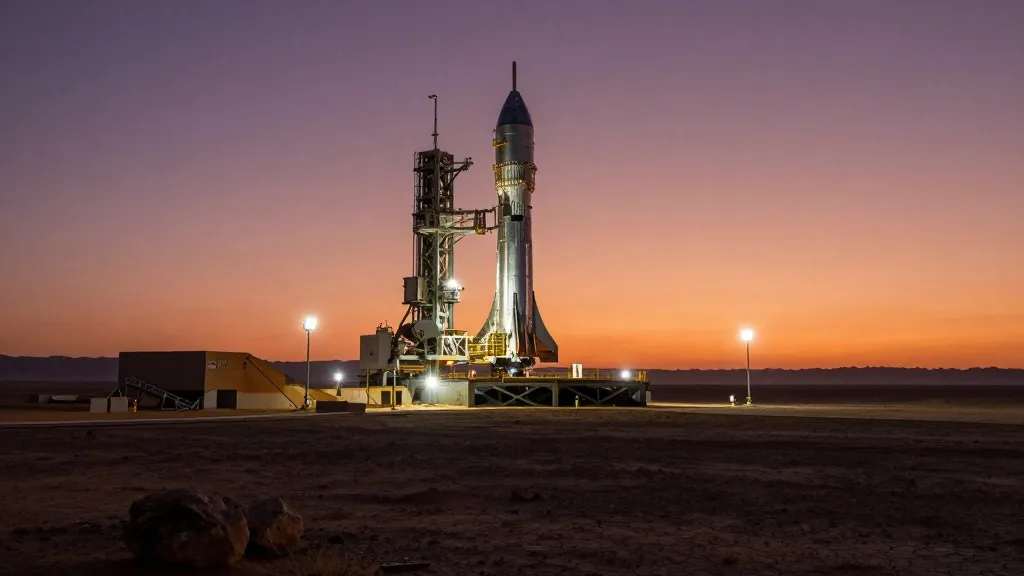
NASA has finally clarified the logistical requirements for its upcoming lunar missions. The agency’s aerospace safety panel released a new estimate indicating that twenty-two launches of SpaceX’s Starship vehicle are necessary to support a crewed landing on the Moon. This figure represents the number of flights required to assemble and fuel a Starship-based lunar lander in low-Earth orbit. The updated projection provides a specific target for a metric that has remained opaque for years.
The agency has historically guarded this number with strict discretion. For several years, officials have treated the launch count as a sensitive internal detail. In 2023, Lisa Watson-Morgan, who served as the director of NASA’s Human Landing System, acknowledged the difficulty in pinpointing the exact figure. She stated that while the agency had a general idea, she was reluctant to disclose the precise number publicly. This approach was consistent with a broader strategy of keeping the specifics of the orbital refueling process under wraps.
Previous estimates from NASA officials have varied significantly, reflecting the evolving nature of the program. Watson-Morgan later suggested the number fell within the high single digits to the low double digits. This range implied approximately a dozen launches. Under that scenario, SpaceX would need to launch one depot Starship and eleven tanker Starships. The tankers would deliver liquid oxygen and methane propellant to the depot to prepare it for the lunar voyage. Other officials have previously cited figures in the high teens, indicating a broader uncertainty in the planning process.
The new estimate of twenty-two launches raises concerns about the timeline for the Artemis Program. Some NASA officials are worried that the number may not decrease soon enough for Starship to play a meaningful role this decade. The primary hope had been that SpaceX would dramatically improve the lift capacity of the Starship rocket. Such improvements would reduce the number of tanker flights needed to fully load the lander. However, if the current lift capacity remains the standard, the higher launch count becomes a significant logistical hurdle.
The figure emerged during a quarterly meeting of the NASA Aerospace Safety Advisory Panel. Charlie Precourt, a former NASA astronaut and panel member, discussed the risks associated with the Artemis Program. He highlighted the challenges of landing humans on the Moon using the current infrastructure. The panel’s discussion underscores the technical and operational complexities involved in returning humans to the lunar surface. As the program moves forward, the focus will shift to verifying whether the launch rate can be sustained safely and efficiently.
This development marks a shift in transparency for one of the most critical aspects of the lunar program. By providing a concrete number, the agency offers a clearer picture of the resource requirements. The estimate serves as a benchmark for evaluating the progress of both NASA and SpaceX. As the Artemis Program advances, the relationship between the number of launches and the success of the mission will remain a central topic of discussion among stakeholders and the public.
Source: Ars Technica