Optimus Ramp-Up: Tesla Pivots Fremont Factory to Mass-Producing Humanoid Robots
Tesla has begun producing high-volume Optimus units at its Fremont plant, aiming to deliver commercial robots to external businesses by the end of 2027.
By Ishani Kapalli ·
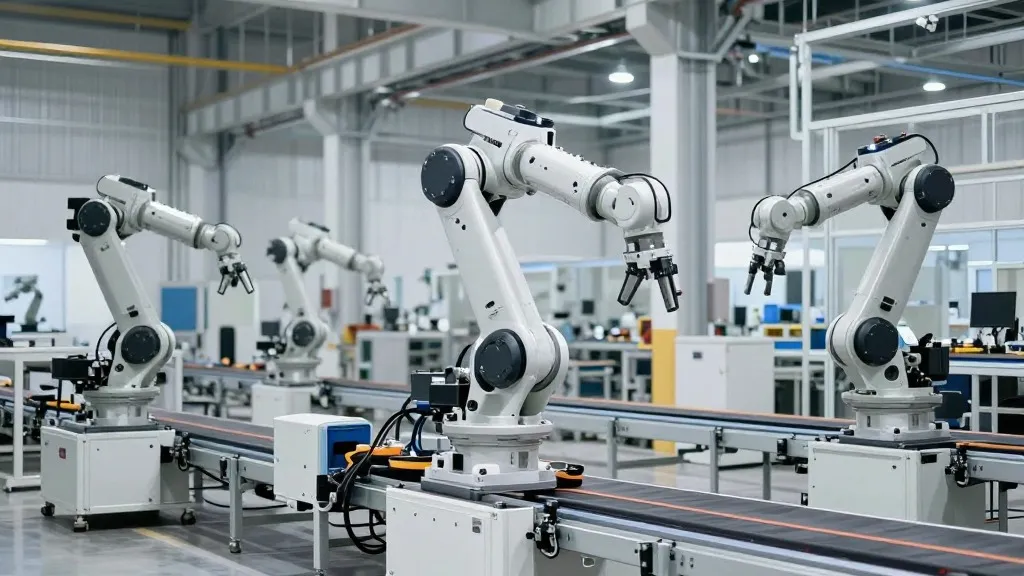
For manufacturers seeking to automate dangerous or repetitive labor, the availability of a viable, mass-produced humanoid robot is becoming a tangible reality rather than a distant concept. Tesla has officially initiated production of its Optimus units on a dedicated high-volume line, marking the first time the company has produced bots it considers ready for commercial use. This shift signals a move from prototype development to the industrialization of human-shaped automation for external clients.
The production line is currently operational in the Fremont factory, occupying space previously used for the Model S and Model X until earlier this spring. Tesla cleared out the old vehicle assembly equipment in just 46 days to install machinery capable of supporting a theoretical annual output of one million units. During the third-quarter earnings call, Elon Musk indicated that the majority of the necessary equipment for this capacity is already in place, with weekly output expected to climb toward 20,000 robots as the ramp-up progresses.
A unique challenge in scaling Optimus is the lack of a massive existing fleet to provide real-world training data, a resource Tesla relies on heavily for its automotive AI. To address this, the company is establishing an "Optimus Academy" within the factory. This internal program will utilize 10,000 to 20,000 robots to practice diverse tasks, generating the data required to improve the next iteration of the model. Every unit produced on the new line will contribute to this continuous learning loop.
Hardware and software improvements are also scheduled for the coming year. Tesla plans to integrate its AI5 chip into the robots to enhance processing power. Musk expects to release a video within one or two months demonstrating the robots completing tasks via AI rather than pre-programmed movements. He noted that the refinement of the AI, electromechanical design, and reliability is on track to be completed by the end of next year, which is when deliveries to outside companies are planned to begin.
The supply chain is already aligning with this production surge. In September, Tesla certified partners Tuopu, Joyson, and Sanhua for mass production of Optimus components. Additionally, construction is underway at Giga Texas for a much larger dedicated facility, with a long-term target of ten million robots annually. Executives noted that production costs are trending toward those of the Cybercab, suggesting the design is optimized for high-volume manufacturing from the outset.
The most significant engineering focus remains on the robot's hands, which Tesla executives describe as the most difficult component to design. Despite this hurdle, the company maintains that the current manufacturing process is suitable for a commercial product, with the initial growth phase characterized by a shallow slope on an S-curve trajectory before accelerating toward full capacity.
Source: Teslarati