Autonomy Strategy: Tesla Adopts Fleet-Based Mapping
Tesla is developing its own navigation maps to address persistent FSD errors, marking a significant departure from its previous vision-only approach.
By Isabella Morales ·
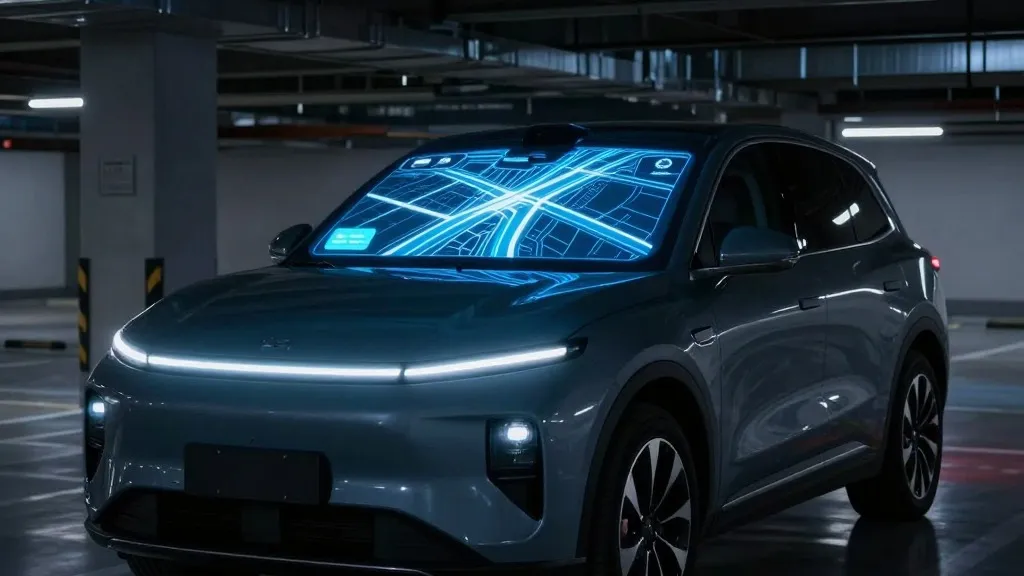
In 55% of the 30 km/h speed zones tested in Brussels, Tesla’s Full Self-Driving system was recorded speeding, with the vehicle averaging 44 km/h. This specific failure rate, documented by a Belgian road safety group last month, highlights a critical gap in the company’s current autonomy capabilities. The incident is not an isolated glitch but part of a broader pattern of environmental misinterpretation that has prompted a strategic shift in how the company approaches navigation and route planning.
The numbers behind this operational challenge are becoming increasingly difficult to ignore. While the Brussels test provides a concrete example, the underlying issue affects multiple core functions of the vehicle. Tesla’s VP of AI, Ashok Elluswamy, acknowledged on the company’s Q3 2026 earnings call that the system relies too heavily on external data sources for tasks such as reading speed limits, identifying parking spots, and selecting standard routes. To address these deficiencies, Tesla is currently building its own maps. This new infrastructure is designed to be fed by data collected from the company’s fleet, creating a dynamic mapping layer that updates as vehicles drive.
The people involved in this decision represent a notable pivot in corporate philosophy. For years, CEO Elon Musk argued against the use of high-precision maps, famously calling them a "really bad idea" and a source of brittleness in self-driving systems. During the 2019 Autonomy Day event, he dismissed the reliance on detailed lane maps as a "huge mistake" and labeled lidar a "fool’s errand." Now, seven years later, the company is constructing a map layer from its own fleet to correct the very errors its vision system struggles to resolve. Elluswamy stated that Tesla "shouldn’t be depending on external people’s maps," signaling a move toward an internal, AI-based mapping architecture.
The implementation of this new system is staged. Elluswamy explained that the technology will begin by handling the start and end of trips in FSD v15. Over the coming months, it is expected to take over broader navigation, parking, and destination management. The system is also designed to learn individual driver preferences and respond to voice commands, integrating mapping data with personalized user settings. This approach suggests that Tesla is moving away from a purely reactive, end-to-end vision model toward a system that pre-processes environmental data to improve decision-making accuracy.
The stakes for Tesla extend beyond mere technical correction; they involve a fundamental reevaluation of its competitive position. Waymo has long operated on a model where sensor-equipped vehicles map cities before service launches, maintaining those maps through continuous fleet operation. Tesla’s new strategy mirrors this closely. By using its fleet to collect data that feeds a proprietary map, Tesla is adopting a similar methodology, differing primarily in the sensor suite used. This convergence raises questions about the distinctiveness of Tesla’s approach, particularly as it operates its Robotaxi service within small, geofenced areas rather than open, unrestricted roads.
Critics and analysts note that this shift undermines the previous messaging that Tesla’s vision-only approach was superior to map-dependent systems. If a simple road element like a speed limit sign requires a dedicated map for reliable interpretation, the premise that vision alone can handle all driving scenarios is challenged. The company is now acknowledging that environmental understanding requires a structured data layer, much like its competitors. This admission comes as the National Highway Traffic Safety Administration weighs an investigation into claims that Tesla Robotaxis are speeding through active school zones, covering roughly 1,000 Model Y and Cybercab vehicles.
The timeline for these changes adds context to the current situation. Tesla has pushed unsupervised FSD in customer cars to Q2 2027, restricting immediate availability to its internal Robotaxi fleet. This delay allows time for the new mapping architecture to mature and for the fleet to accumulate sufficient data to refine the system. As the company builds this infrastructure, it is effectively closing the gap between its technology and that of established competitors like Waymo, which has been running driverless services for years using similar mapping principles.
Ultimately, the development of Tesla’s own maps represents a pragmatic response to real-world performance issues. While the company is not necessarily adopting the centimeter-level high-definition maps Musk once criticized, the fleet-built map is designed to become increasingly detailed over time. This evolution suggests that the line between Tesla’s vision-based autonomy and traditional mapped navigation is blurring. For consumers and regulators, the key metric will be whether this new mapping layer can reliably resolve the speed and route errors that have defined recent performance reviews.
Source: Electrek