Thames Wreck Masts Cleared in Bid to Avert Potential Blast
A risky engineering project to stabilize a World War II shipwreck in the Thames Estuary has been completed, leaving the vessel's massive explosive cargo intact for continued monitoring.
By Khalid Rahman ·
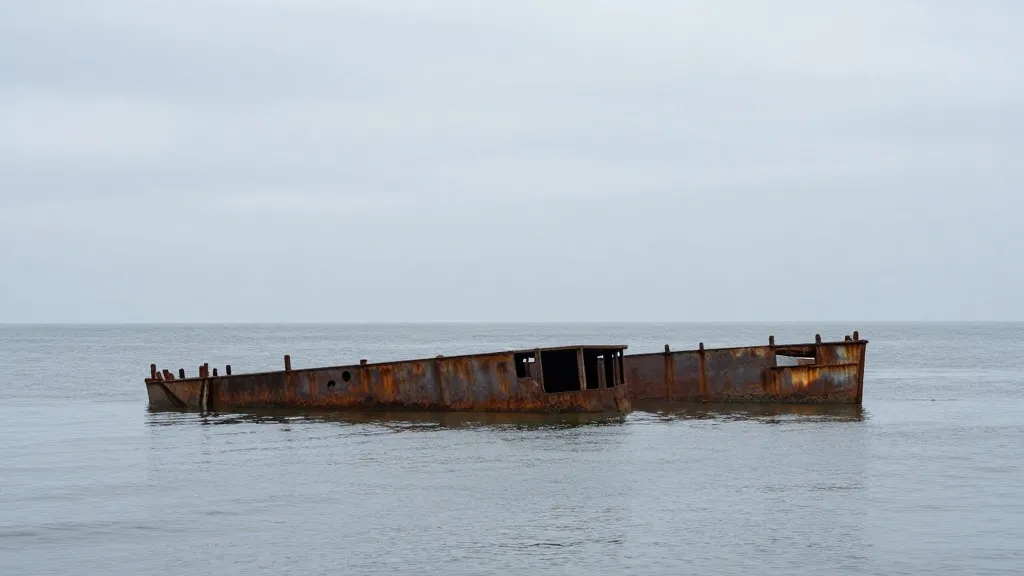
A major effort to mitigate the risk of a catastrophic explosion in the Thames Estuary has concluded, with engineers successfully removing the three rusting masts from the SS Richard Montgomery. The U.S. shipwreck, which has sat off the coast of Kent for over eight decades, still holds a vast quantity of World War II munitions. While the removal of the masts reduces the immediate structural threat, the explosives remain in place, prompting officials to maintain close surveillance of the site.
The Montgomery was one of roughly 2,700 vessels constructed in the United States to support the Allied war effort. In August 1944, the ship struck a sandbar off Sheerness, approximately 40 miles from London, while carrying ammunition intended for use after the D-Day landings. The vessel broke apart during salvage attempts and sank, trapping an estimated 1,500 tons of explosives in its cargo holds. For many years, the masts protruding from the water served as a familiar landmark for locals and passing ships, but recent inspections revealed that the structure was deteriorating further.
Concerns grew that the aging masts could collapse, potentially impacting the cargo below. Nolan Conway, a naval architect with Resolve Marine Group, the firm tasked with the operation, explained that the ship had begun to lean. He noted that the primary fear was that the masts might fall onto the munitions, causing a detonation. Conway added that some of the explosives are believed to have pressure fuses, meaning that even a moderate impact could trigger an explosion.
The engineering team faced the challenge of cutting the masts without causing vibrations that could endanger the wreck or the workers. To accomplish this, the crew constructed a custom lifting frame designed to raise each mast without any swinging or swaying. They also employed a remotely operated underwater diamond-wire saw, which clamps around the masts with hydraulic arms and cuts through them, eliminating the need for divers to enter the water.
U.K. maritime minister Keir Mather informed the House of Commons that the complex project was finished ahead of schedule and within the allocated budget. The cost to remove all three masts was just under $13 million. Mather stated that the masts had placed a significant load on the structure, and their removal helps reduce the risk, supporting the long-term safe management of the site.
The explosives have been left in place because extracting them would involve substantial risks. There is also disagreement among experts regarding the potential scale of a detonation. Conway noted that estimates range from minor shoreline damage to a tidal wave traveling up the Thames, or a relatively small event that might only close a nearby shipping channel. He summarized the uncertainty by saying there is a wide range of potential impacts, but none are desirable. Despite this, officials continue to assess the overall likelihood of an explosion as low.
The government has maintained an exclusion zone around the wreck, which lies about 1.5 miles from the Sheerness coast. Mather confirmed that the site will remain under continuous monitoring and control through this zone. The removed masts are not being discarded; they have been moved to the Historic Dockyard Chatham museum. There, they will be displayed to recognize the ship's historic significance and its role in supporting Allied forces. The Montgomery and its cargo will remain where they settled, now hidden beneath the surface but still a subject of careful attention.
Source: CBS News