Iran Threatens Gulf Infrastructure and Raises Nuclear Option If US Strikes Again
Tehran has warned that a renewed US and Israeli air campaign would prompt attacks on civilian and energy targets across the Persian Gulf, according to a Wall Street Journal report.
By Worldwide Blast Staff ·
Iran is warning that a renewed US and Israeli air campaign would be met with strikes on a far wider set of targets, including civilian infrastructure, according to a report by The Wall Street Journal. The warnings have come both in public statements and through diplomatic channels.
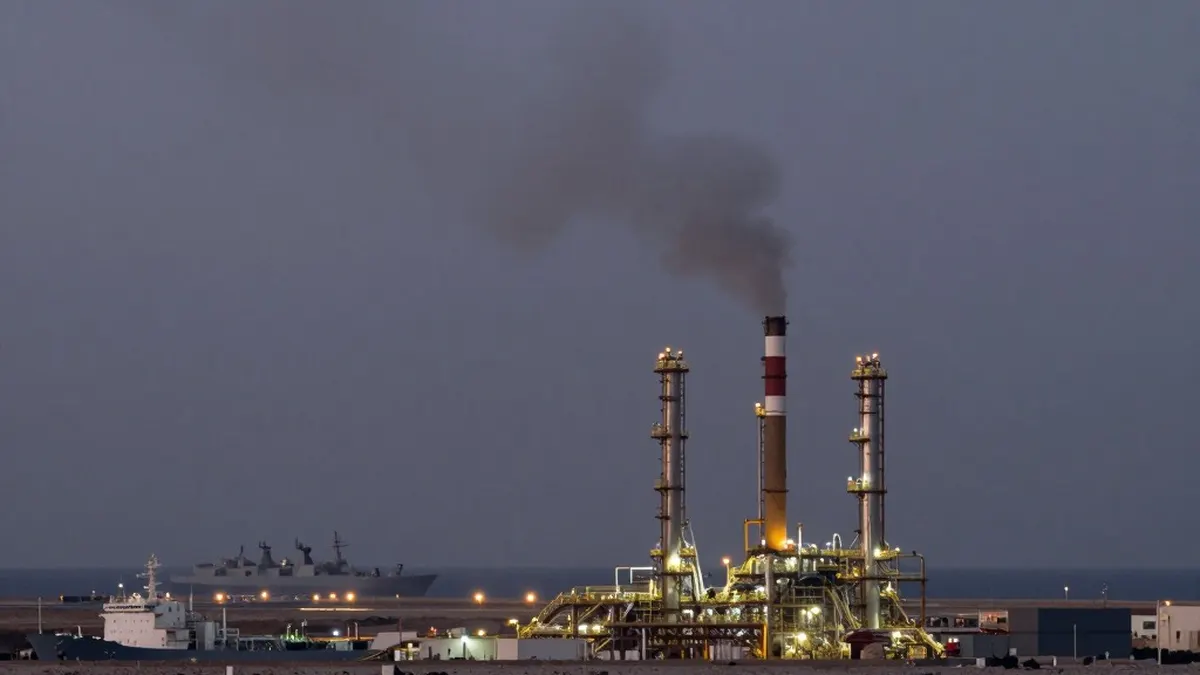
According to the report, Tehran has said it would hit not only American bases and warships but also energy facilities, natural gas pipelines, airports and other civilian sites around the Persian Gulf. Iran has also threatened to use a new range of weapons, including nuclear bombs.
Iran International, a media outlet opposed to the regime, reported that Mohammad-Saleh Jokar, who heads the Iranian parliament's International Affairs Committee, urged the country's authorities to permit "deterrent weapons, including nuclear weapons" if the United States attacks Iran. Jokar also called for Iran to suspend its cooperation with the Nuclear Non-Proliferation Treaty in that event. He added that countries hosting the US on their territory or in their airspace would face a "harsh response" and "pay a heavy price."
Analysts quoted by the WSJ estimate that Iran holds hundreds of thousands of ballistic missiles and has restarted production in underground facilities. Iran appears to be leaning on its missile and drone stockpile as a deterrent, even though the arsenal remains substantial after Operation Roaring Lion, Operation Epic Fury and the blockade that followed.
During the most recent confrontation, US air bases, embassies and fleets across the region suffered significant damage. Energy and industrial sites in the UAE were hit, as were gas plants and airports in Qatar, Dubai, Kuwait and Bahrain. Tehran now seeks to inflict even greater pain if fighting resumes, at a moment when interceptor missile stocks are strained in Israel and in Gulf states aligned with Washington after the pause in hostilities.
Foreign Minister Abbas Araghchi wrote in a Financial Times op-ed that new attacks "will put civilian lives and the well-being of all regional states and the global economy at great risk." The Pentagon has said that up to 90% of Iran's drones, missiles and naval industry was destroyed, yet analysts told the WSJ that Tehran remains willing to widen its retaliation.
Experts see both resolve and limits in that approach. Sina Toossi of the Center for International Policy said the consensus in Tehran is that deterrence requires imposing "immediate, sustained and substantial costs" on adversaries. Saeid Golkarat, an expert on the Revolutionary Guard, cautioned that Iran risks overreaching if it tries to carry out every threat, and must carefully manage its shrinking missile supply. Farzin Nadimi of the Washington Institute said Iran could do major damage to the region's energy and internet infrastructure, but would most likely lose its own in reciprocal attacks.
Negotiations have been deadlocked for months. US President Donald Trump has repeatedly warned that failure to reach an agreement could lead to a US attack on Iran after the midterm elections in early November. Israel has also stepped up preparations for possible strikes in recent weeks, and conflicting reports have said the IDF planned to hit Iran on October 10 before being held back by Trump.
Source: The Jerusalem Post