Vucic Seeks Return to Power as Serbs Vote in Pivotal Election
Former president Aleksandar Vucic is asking voters for a fresh mandate after nearly two years of unrest, with polls giving his coalition a lead over a student-backed opposition list.
By Worldwide Blast Staff ·
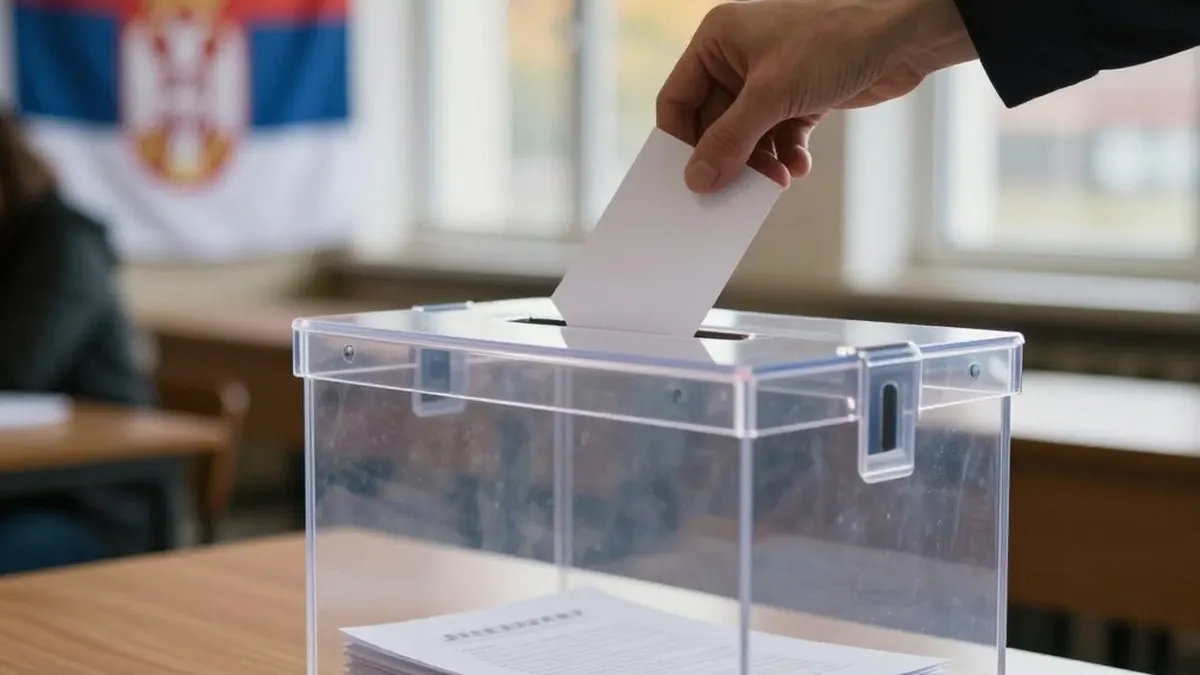
Serbs cast their ballots on Sunday in what observers describe as one of the most consequential elections in the country's recent history, with Aleksandar Vucic asking voters to renew their confidence in the leader who has dominated the Balkan nation for more than a decade. His tenure has coincided with considerable economic development and a distinctive foreign policy that has kept Serbia on productive terms with the United States, Russia, China, and Israel.
Vucic, who stepped down as president on September 27, is aiming to return to the prime minister's office, the post he held from 2014 to 2017 before winning the presidency. The vote gives him a chance to secure a new public mandate after almost two years of political turmoil that began with student-led protests following the collapse of a railway station canopy in Novi Sad in November 2024. The disaster killed 16 people and fueled broad accusations of corruption, negligence, and a lack of public accountability.
Vucic heads a list called United Serbia, built mainly around his Serbian Progressive Party (SNS), which he helped found nearly two decades ago. The coalition also includes the Serbian Radical Party, PUPS, the Serbian People's Party, the Workers' Party, the People's Peasant Party, and the United Peasant Party.
Despite the sustained protest movement, Vucic enters the contest with notable advantages. Many voters associate his leadership with modernized infrastructure, improved living standards, and stability in a country whose post-Yugoslav history has been shaped by conflict and economic uncertainty.
An Ipsos survey published on Thursday put United Serbia at 47.4% against 40% for the student-backed list, suggesting the governing bloc retains a sizable base. The poll of 3,624 respondents was commissioned by Vucic's coalition, while other surveys have pointed to a much tighter race or even an opposition lead, leaving the outcome uncertain.
For Israel, a Vucic victory would preserve a valued relationship with a European state that has maintained close diplomatic and defense ties, particularly since October 7, often breaking with other European governments. In an exclusive interview with The Jerusalem Post at the Presidential Palace in Belgrade last year, Vucic defended Serbia's rapid decision to supply Israel with military equipment after the Hamas attacks. "I am the only one in Europe today dealing in military ammunition with Israel," he said. "And it is why I am often criticized by colleagues."
The partnership has deepened since, expanding into defense technology and military production, including plans for a joint drone manufacturing facility involving Israel's Elbit Systems. Trade and investment have also grown, and the two countries formalized a strategic partnership earlier this year. "Our ties with Jews and Israelis, this is something different from a historical perspective up to the present day," Vucic said in the interview. "This isn't policy or current politics, no. This is our politics of all times, and it will always have to remain so."
Belgrade has also drawn closer to Washington. A 2024 Gallup International survey found 59% of Serbs would have backed Donald Trump over Kamala Harris, the highest figure in Europe, and Trump told Newsmax Balkans earlier this month that the two countries enjoy "very good relations." Secretary of State Marco Rubio and Foreign Minister Marko Djuric launched a strategic dialogue in July covering economic cooperation, security, and energy infrastructure, a significant step given the legacy of NATO's 1999 bombing of Serbia and one that could help Belgrade reduce its dependence on Russia.
Serbia has simultaneously strengthened ties with the United Arab Emirates through investment, trade, and energy cooperation, with Vucic's friendship with President Sheik Mohamed bin Zayed Al Nahyan a key element. The Serbian leader voiced solidarity with the Emirates after war with Iran erupted in February. Taken together, these relationships reflect a diplomatic approach of cultivating close links with Israel, the US, and Arab partners while preserving longstanding connections with Russia and China, whose investments in Serbian infrastructure and industry remain vital.
Sunday's vote will also show whether Vucic can pull off a significant personal transition. His resignation last month opened a path back to the office where he first consolidated power, a gamble that carries risk given the opposition's strength but signals his confidence that his appeal can still deliver a governing mandate. For a country of roughly 6.5 million people, Serbia has built a diplomatic footprint well beyond what its size or economic weight would suggest.
Source: The Jerusalem Post